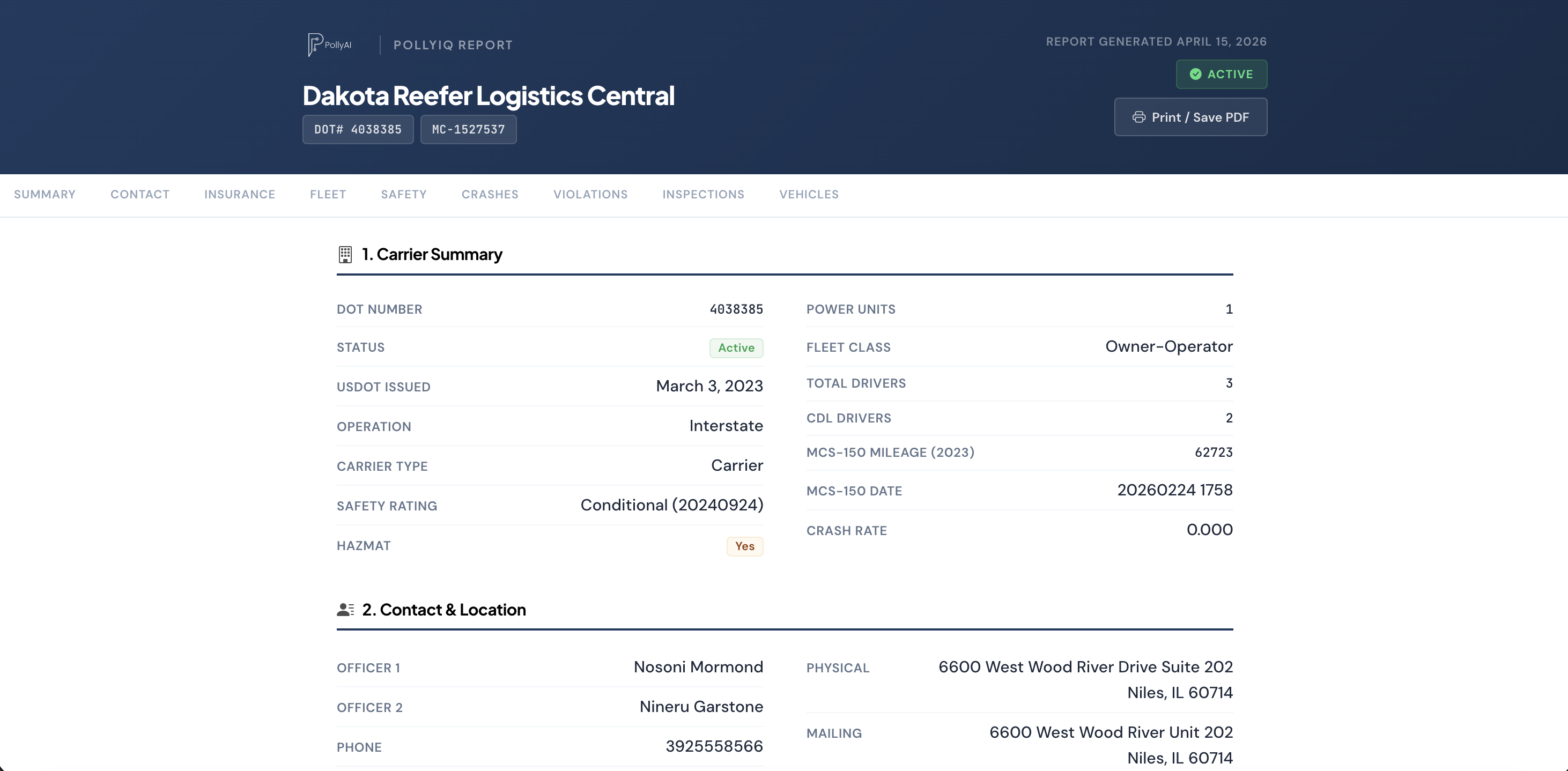
Every motor carrier your agency quotes has a safety story on file with the federal government, and the carrier safety rating is the loudest line in it. Agents who can read that rating, and the 24 months of inspection data behind it, qualify prospects faster, avoid unplaceable accounts, and walk into underwriting conversations with answers instead of surprises.
This guide covers what a carrier safety rating is, how to run a DOT safety rating lookup for free, what Satisfactory, Conditional, and Unsatisfactory mean for insurability, and how trucking insurance agents turn safety data into won business.
What Is a Carrier Safety Rating?
A carrier safety rating is the FMCSA's official grade of a motor carrier's compliance with federal safety regulations. It is assigned after an onsite compliance review and comes in three levels: Satisfactory, Conditional, or Unsatisfactory. Carriers that have never been through a review carry no rating at all, and that Unrated status is the most common one in the entire census.
The rating comes out of the safety fitness procedures in 49 CFR Part 385. During a compliance review, investigators examine six factors: general management controls, driver qualification, operations, vehicle maintenance, hazardous materials compliance, and accident history. The result is a formal federal determination of whether the carrier is fit to operate, which is exactly why underwriters check it before anything else.
How Do You Look Up a DOT Safety Rating?
Search the carrier's DOT number, MC number, or company name in the FMCSA's free SAFER Company Snapshot at safer.fmcsa.dot.gov. The snapshot shows the current safety rating and the date of the review that produced it, alongside authority status, fleet size, and inspection summaries.
Two things trip agents up on that page. First, most snapshots show a rating of "None", which is not a red flag by itself (more on that below). Second, the rating date matters as much as the rating: a Satisfactory from 2015 says very little about how the carrier runs today. The current picture lives in the inspection and violation data, which is where a DOT safety rating lookup should always lead next.
Checking 1 carrier is a 60-second job. Checking the 300 carriers on a prospect list is a workflow problem, which is what data platforms built on the same FMCSA records exist to solve.
Satisfactory vs Conditional vs Unsatisfactory: What Each Means for Insurance
The three ratings carry very different weight in the insurance market:
Passed the review
The carrier had adequate safety management controls at the time of review. Broadest market appetite, best pricing leverage for the agent. Still check the inspection trend, because a rating issued years ago can hide a deteriorating operation.
Operating, but flagged
The FMCSA found inadequate safety management controls. The carrier can legally operate, but many standard markets decline Conditional risks and the rest surcharge them. For agents this is also an opening: a Conditional carrier with documented corrective action and clean recent inspections is a placement most competitors skip.
Unfit to operate
The carrier failed the review. Property carriers face an out-of-service order 60 days after notice, passenger and hazmat carriers after 45 days, unless the rating improves. Effectively uninsurable in the standard market until the carrier fixes the problems and the FMCSA upgrades the rating.
Why Most Carriers Are Unrated (And What Underwriters Check Instead)
The FMCSA census holds records on more than 2 million carriers, and the agency can only review a small fraction of them in any year. The result: the large majority of active carriers have never received a rating, and many rated carriers hold a grade that is years old.
Underwriters know this, so they lean on the live data instead: Safety Measurement System scores, roadside inspection results, out-of-service rates, and crash history over the trailing 24 months. That is the data an underwriter's CAB report is built from, and it is why an Unrated carrier with an ugly inspection record gets declined while another Unrated carrier sails through.
For a quick benchmark, national out-of-service averages hover around 20 percent for vehicles and 5 percent for drivers. A prospect sitting well above either number will get an underwriter's attention whether or not a formal rating exists, so it should get yours first.
How Trucking Insurance Agents Use Safety Ratings to Win Business
A safety rating is not just an underwriting hurdle. Used early, it is a prospecting filter and a sales asset:
- Qualify before you dial. Screening a DOT lead list by safety data before outreach means every call goes to a placeable risk. Skip the fresh Unsatisfactory ratings, flag the Conditionals for a corrective-action conversation, and prioritize the clean operations.
- Pre-underwrite the submission. Pull the carrier's authority status, safety scores, 24 months of roadside activity, crash history, and equipment into one truck carrier report, then address the red flags in your cover note before the underwriter finds them in review.
- Time the conversation. A rating change or a worsening inspection trend is a concrete reason to call a prospect or revisit a renewal. The carrier's current agent is probably not watching; the agent who is gets the meeting.
Safety Data Checklist Before You Quote
- Rating: current level and how old the review is
- Inspections: 24 months of violations and OOS events reviewed
- OOS rates: compared against the national averages
- Crashes: history pulled and explanations gathered
- Corrective action: documented for any Conditional history
PollyAI puts this whole check inside the prospecting workflow. Filter the FMCSA census by state, fleet size, cargo, and equipment, then open a print-ready carrier report on any DOT number with the safety rating, inspection detail, and crash history already assembled. It is included with every plan, starting at $39 per month.
Carrier Safety Rating FAQs
What is a carrier safety rating?
It is the FMCSA's official compliance grade for a motor carrier, assigned after an onsite compliance review. The three levels are Satisfactory, Conditional, and Unsatisfactory, and carriers never reviewed are Unrated.
How do I look up a carrier's DOT safety rating?
Search the DOT number, MC number, or name in the free SAFER Company Snapshot at safer.fmcsa.dot.gov. The rating and its review date appear on the snapshot; inspection detail lives in the FMCSA's Safety Measurement System.
Can a carrier with a Conditional safety rating get insurance?
Yes, but the market shrinks and premiums rise. Many standard markets decline Conditional risks. Documented corrective action plus clean recent inspections can open specialty markets, with pricing revisited after an upgrade.
How does a carrier change a Conditional or Unsatisfactory rating?
The carrier submits evidence of corrective action to the FMCSA and requests a rating change under 49 CFR Part 385. Unsatisfactory carriers are on a clock: 60 days to an out-of-service order for property carriers, 45 for passenger and hazmat.
Want the full picture beyond the rating? Our guide to carrier vetting walks through the complete data check, and the carrier analysis walkthrough shows the 5-step review to run before you quote any motor carrier.