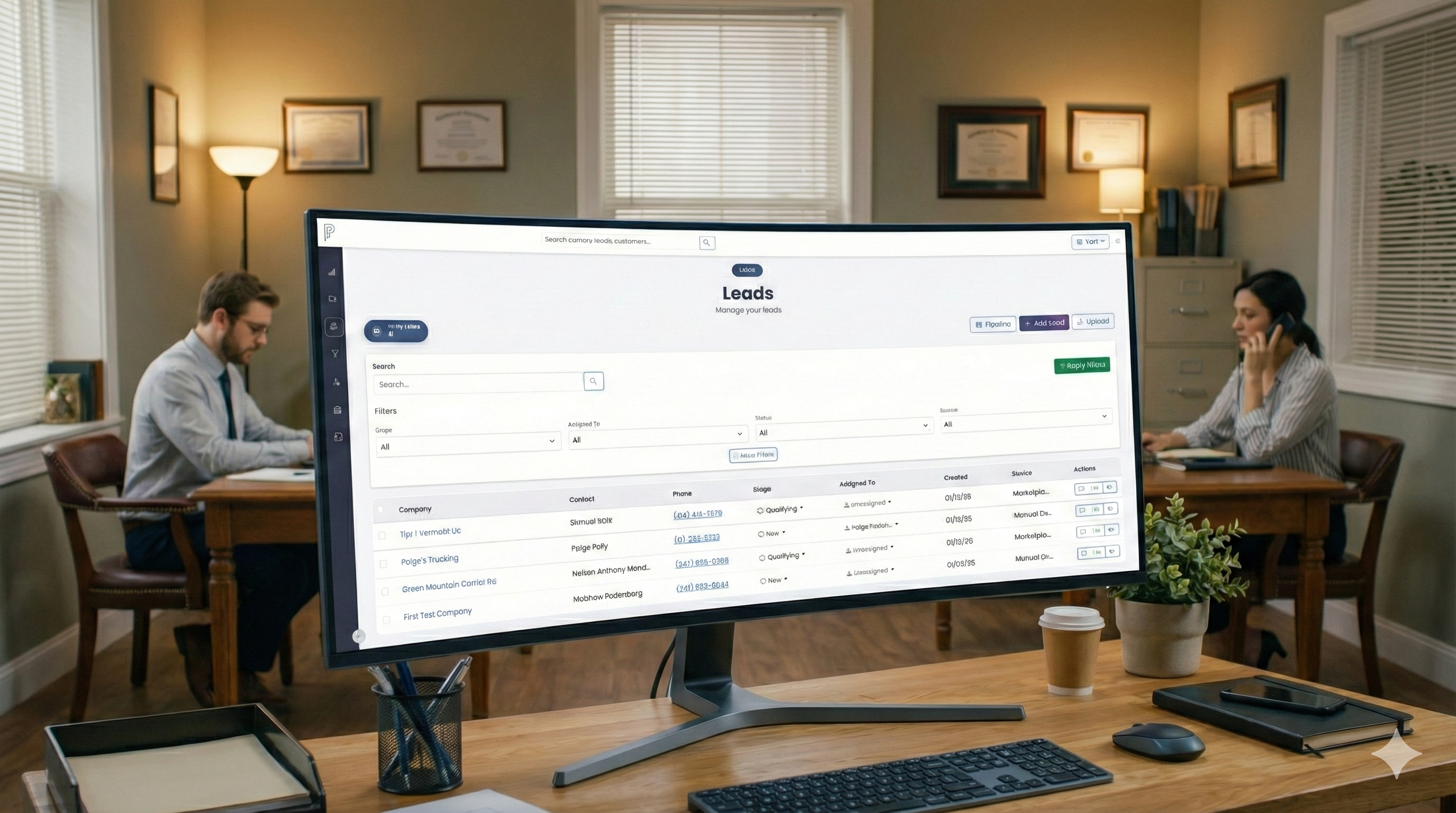
Truck insurance marketing has a math problem. A shared commercial truck lead costs $30 to $60, gets sold to five or more agents, and the carrier who filled out that web form is already fielding calls before you ever see the file. You are paying a premium to enter a bidding war.
The agents growing their books in 2026 are running a different play. Instead of renting leads, they build their own pipeline from data every motor carrier is required to file, then market to it consistently. This post lays out that system end to end: where the data comes from, when to reach out, what to send, and how to keep it running in under an hour a week.
Why Most Truck Insurance Marketing Fails
Most agency marketing fails for one of three reasons, and none of them is effort.
- Rented audiences. Shared leads, purchased lists, and aggregator traffic put you in line behind every other agent who bought the same name.
- Stale data. A list compiled last quarter misses the carriers who got their authority last week, and those new authorities are the ones actively shopping for coverage.
- Random timing. A great pitch sent eight months before renewal lands in the trash. The same pitch 45 days out starts a quote conversation.
Fixing those three things matters more than any ad budget. Generic advice says post more, boost more, buy more. The trucking niche rewards something cheaper: knowing exactly who just entered the market and who renews next month.
Start With FMCSA Data, Not an Ad Budget
Every for-hire motor carrier in the country registers with the FMCSA, and the core of that registration data is public: authority status, fleet size, cargo types, garaging state, and insurance filings. That census is the single best marketing asset in trucking insurance, because it is the whole market, not a sample that filled out a form.
Worked correctly, the data gives you two standing campaigns:
- New authorities. Carriers that just received their DOT or MC number need liability coverage to activate it. They are the highest-intent prospects in the industry, and new authority leads surface daily if you know where to look.
- The standing book of carriers. Established fleets filtered by state, power units, and cargo type become your long-game nurture audience. Our guide to DOT leads covers how to turn raw census data into a working prospect list.
You can pull this manually from government sites, and plenty of agents start there. The trade-off is hours of cross-referencing SAFER snapshots against insurance filings, which is exactly the grunt work a data platform automates.
Time Your Outreach to Renewal Windows
Insurance is bought on a calendar, so marketing should run on one too. Carrier insurance filings include expiration dates, which means you can know, months in advance, when a fleet's policy comes up for renewal.
A simple cadence that works:
Introduce
A short, personal email: who you are, the markets you write, and an offer to benchmark their current coverage before renewal season starts.
Quote
Follow up with a direct ask for the declarations page. This is when fleets are comparing options and a competitive quote gets real attention.
Last call
A final, low-pressure note. Even a no builds recognition for next year's cycle, and renewal dates repeat annually.
Run that sequence against every carrier in your appetite and your marketing stops being a series of one-off blasts. It becomes a rolling calendar where some segment of your list is always 60, 30, or 7 days from a buying decision.
Send From Your Own Domain, Not a Lead Vendor's
Channel choice in truck insurance marketing is simpler than the gurus make it. Owner-operators and small fleet managers live in their inbox and on their phone. Email is the workhorse, and the single biggest factor in whether it works is the sending domain.
Campaigns that send from your own agency domain (connected through your existing Outlook or Gmail inbox) read as a personal introduction from a local agent, not a marketing blast. Deliverability improves, replies come back to the inbox you actually work from, and every touchpoint builds your agency's name instead of a vendor's.
The Truck Insurance Marketing Stack
- Data: FMCSA census, new authorities, insurance expirations
- Targeting: State, fleet size, cargo type, current insurer
- Outreach: Email sequences from your own domain
- Pipeline: Replies tracked from first touch to bound policy
A Weekly Routine You Can Actually Keep
Consistency beats cleverness in this niche. The system above runs in about an hour a week:
- Monday: Pull the week's new authorities in your states and add them to your welcome sequence. This is the core of the 15-Minute Morning routine.
- Midweek: Review replies and move warm conversations into your quote pipeline.
- Friday: Refresh the renewal-window list for the next 60 days and queue the cadence for carriers entering it.
That is the whole engine. No content calendar, no ad spend, no agency retainer. Just the right carriers, at the right time, hearing from you first.
What to Measure
Skip vanity metrics. Four numbers tell you whether truck insurance marketing is working: list growth (carriers in appetite added per week), reply rate on first-touch emails (2 to 5 percent is realistic for well-targeted cold outreach), quotes started per month, and bound premium per hour of marketing effort. If reply rate is healthy but quotes are not, the issue is usually follow-up speed rather than the list.
On cost: the math favors owned data quickly. PollyAI's state bundle pricing is $40 per state per month with unlimited pulls, which is roughly the price of a single shared lead that five other agents are also calling.
Truck Insurance Marketing FAQs
What is the best way to market truck insurance?
Start with data you own instead of leads you rent. Build lists from FMCSA registrations and insurance expirations, filter to your appetite, and run a renewal-timed email cadence from your own domain. It out-converts shared leads because you are the only agent in the conversation.
How do agents find trucking companies to quote?
The FMCSA census is the master list: every active carrier with authority status, fleet size, cargo, and insurance filings. Our breakdown of trucking insurance leads compares the ways agents turn that data into quote-ready prospects, and our ranking of the best trucking insurance leads scores each source on exclusivity, intent, and cost per quote.
How much should an agency spend?
Less than you think. A focused two-state setup costs $80 per month in data and an hour a week of effort. Scale states as your appetite and licensing grow, and add paid channels only after the owned-data engine is producing consistent quotes.