A carrier calls you for a quote and rattles off what his broker told him: $100,000 in cargo, certificate by Friday, or the loads stop. He knows he needs motor truck cargo insurance. What he does not know is what it actually covers, why his buddy's theft claim got denied last year, or why his rate doubled when he switched from dry van freight to reefer loads.
The agent who can answer those three questions wins the account, because most of the competition quotes the limit and moves on. This guide covers what motor truck cargo insurance does, where the coverage requirement really comes from, what it costs, the exclusions that generate the claim disputes, and how trucking insurance agents can prospect for cargo business using the commodity data carriers already report to the government.
What Motor Truck Cargo Insurance Covers
Motor truck cargo insurance covers a for-hire carrier's legal liability for loss of or damage to the freight in its care, from the moment the cargo is loaded until it is delivered and signed for. When a load is destroyed in a rollover, stolen at a truck stop, or ruined by a fire, cargo coverage is what makes the shipper whole and keeps the carrier's broker relationships alive.
The legal backdrop matters for how you sell it. Under the Carmack Amendment, a motor carrier is liable for the full actual value of freight lost or damaged in transit, with only a handful of narrow defenses. That liability exists whether or not the carrier bought insurance. Cargo coverage does not create the obligation; it funds it. A carrier running without cargo insurance is not avoiding the risk, he is self-insuring a liability that follows him load by load.
Typical policies are written per vehicle with a per-occurrence limit, and $100,000 is the de facto industry standard because that is what most brokers and shippers require on the certificate. Higher-value commodities push limits of $250,000 or more, and the deductible usually sits between $1,000 and $2,500.
Who Actually Requires Cargo Coverage (It Is Usually Not the FMCSA)
Here is the point that separates agents who know trucking from agents who quote it occasionally: for general freight, cargo insurance is not a federal filing requirement. The FMCSA's insurance requirements mandate cargo filings only for household goods carriers. The public liability filing (the BMC-91) is what federal authority actually turns on for everyone else.
So why does every carrier carry cargo coverage anyway? Because the market requires what the regulator does not. Freight brokers and shippers almost universally demand a certificate showing active cargo coverage, typically at $100,000, before tendering a single load. No certificate, no freight. For a working carrier, that makes cargo coverage as mandatory as fuel, just enforced by the load board instead of Washington.
That distinction is a selling tool. A new authority shopping for his first package often believes the government requires cargo coverage and treats it as a compliance checkbox. When you explain what Carmack liability means and why the broker's requirement exists, you have repositioned yourself from certificate vendor to risk advisor, and the rest of the account usually follows.
What Motor Truck Cargo Insurance Does Not Cover
Cargo claims get denied on exclusions far more often than on limits. These are the ones to walk through with every prospect before the claim happens:
- Theft from an unattended vehicle. Most policies require the truck to be locked, and many require a secured or guarded lot for overnight stops. A load stolen from an unlit backroad pull-off is the classic denied claim.
- Restricted and excluded commodities. Electronics, alcohol, tobacco, and other high-theft freight are commonly excluded or sublimited. A carrier whose policy was rated for building materials has a problem the day he books a load of TVs.
- Refrigeration breakdown. A spoiled reefer load is only covered if the policy carries a reefer breakdown endorsement. For any carrier hauling temperature-controlled freight, this endorsement is the difference between coverage and a five-figure hole.
- Employee dishonesty and contraband. Driver theft and illegally transported goods sit outside the policy.
- The truck and trailer themselves. Equipment is a physical damage policy, not cargo. Prospects mix these up constantly, which is another chance to demonstrate you know the difference.
What Motor Truck Cargo Insurance Costs
For a general freight carrier with a clean record, cargo coverage typically runs a few hundred to over a thousand dollars per truck per year, commonly landing in the $400 to $1,200 range. Four factors drive the rate:
What the truck hauls
The single biggest rate driver. Dry van general freight sits at the bottom of the range; refrigerated food, electronics, and other high-theft or spoilage-prone commodities price at the top or require special terms.
Coverage limit and deductible
$100,000 is the broker-standard baseline. Contracts for higher-value freight push $250,000 or more, and premium scales with it.
Loss history and safety record
Prior cargo claims, inspection results, and out-of-service history all feed the rate. Underwriters read the same public safety data you can pull on any DOT number.
Operating radius and lanes
Long-haul operations with overnight stops in high-theft corridors carry more exposure than regional day-cab work that parks in the yard every night.
Cargo rarely travels alone. It is quoted alongside primary liability and physical damage as part of the working package, which means the cargo conversation is really an account conversation. The agent who asks what the carrier hauls, checks the reefer endorsement, and flags the unattended-vehicle clause is quoting the whole book, not a line item.
The Cargo Quote Checklist
- Commodities: what is actually hauled, not what the application says
- Limit: what the broker contracts require, usually $100,000
- Reefer breakdown: endorsed if anything temperature-controlled moves
- Theft terms: where the truck parks overnight, in writing
- The rest of the account: liability, physical damage, occupational accident
Prospect for Cargo Business by What Carriers Haul
The prospecting angle most agents never use: every motor carrier reports its cargo classifications to the FMCSA on its MCS-150, and that data is public. Reefer operations, building materials haulers, general freight fleets, they are all identifiable before the first phone call. Our guide to MCS-150 data covers what carriers file and how current it stays.
That means you can build a list that matches your carrier appetite instead of cold-calling the phone book. Writing a market that wants reefer accounts? Filter for refrigerated food haulers in your states and lead with the breakdown endorsement question. Strong on general freight? Pull dry van fleets with 5 to 20 power units coming into their renewal window, then run the 60-30-7 renewal sequence against the list.
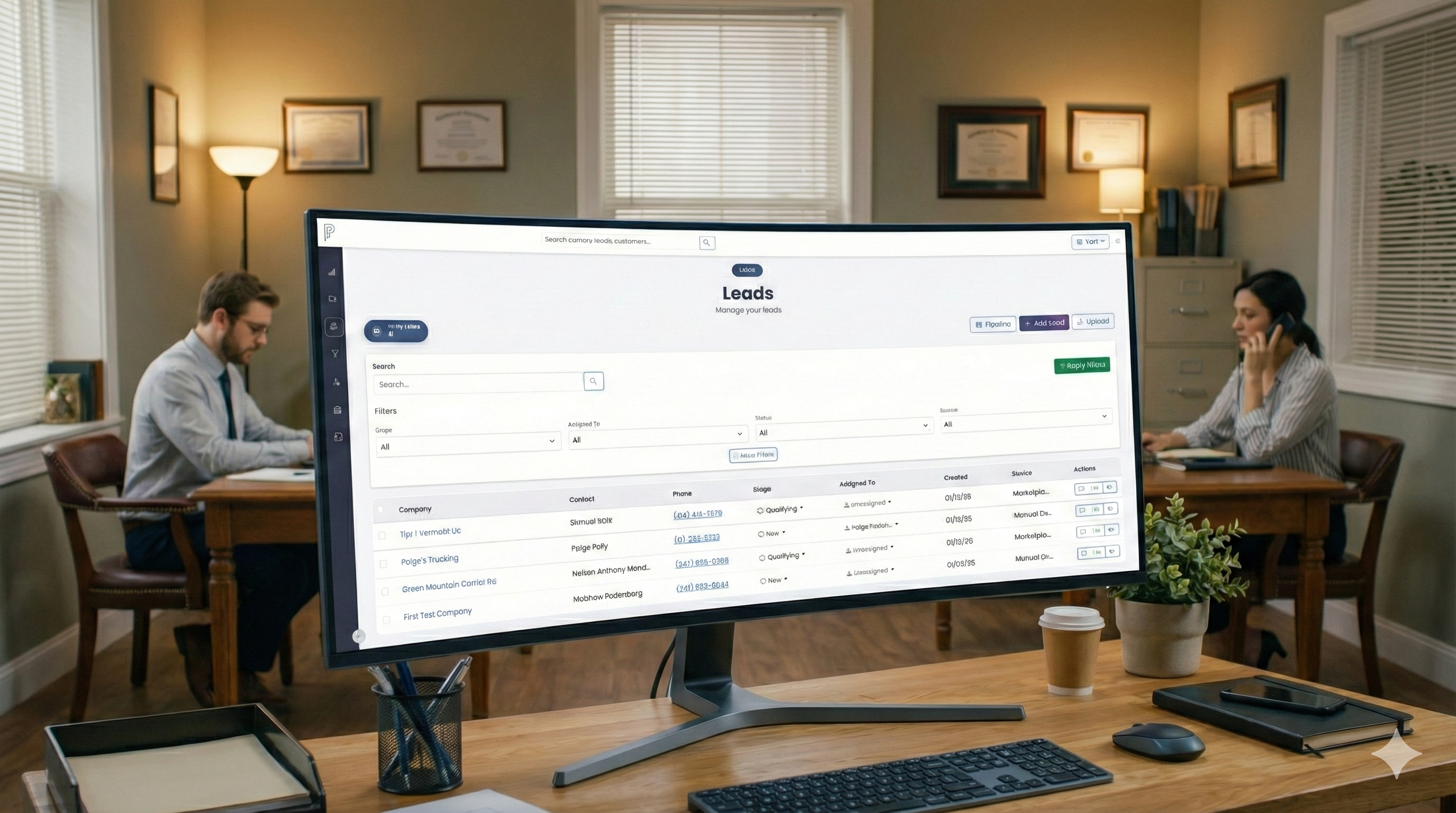
PollyAI turns the FMCSA census into that list: filter by cargo type, equipment, state, fleet size, and insurance renewal date, then run the outreach from your own inbox. Plans start at $39 per month, which is less than the commission on one cargo policy.
Motor Truck Cargo Insurance FAQs
What is motor truck cargo insurance?
Coverage for a for-hire carrier's legal liability for freight in its care, from loading through delivery. It responds to perils like collision, fire, theft, and (when endorsed) refrigeration breakdown, and it is what pays the shipper when a load is lost or damaged.
Is cargo insurance required by the FMCSA?
Not for most carriers. Federal cargo filings apply to household goods carriers; for general freight the requirement is commercial. Brokers and shippers demand proof of coverage, typically $100,000, before tendering loads.
How much does motor truck cargo insurance cost?
Commonly $400 to $1,200 per truck per year for general freight with a clean record. Commodity type is the biggest variable; high-theft and temperature-sensitive freight price higher or require special terms.
What is the most common reason cargo claims get denied?
Exclusions, not limits. Theft from an unattended or unsecured vehicle and refrigeration breakdown without the reefer endorsement lead the list, followed by excluded commodities the policy was never rated for.
Cargo coverage opens the account; finding the right carriers opens the pipeline. The trucking insurance leads guide covers how to build exclusive prospect lists from FMCSA data instead of buying shared leads.