Ask ten agents how to find owner operators to insure and you will hear the same answers: buy a lead list, work referrals, post in Facebook groups, hang around the truck stop counter. Those can all produce an account now and then. None of them produces a pipeline. Meanwhile, every owner operator you could ever want to write is sitting in one public database, updated continuously, free to read.
This guide covers where owner operators actually show up in the data, why the usual sources underperform, and the filter-and-timing workflow that turns the FMCSA census into a steady stream of one-truck and two-truck accounts.
Why Owner Operators Are Worth the Hunt
Owner operators are the volume play in trucking insurance. Per FMCSA registration data, the overwhelming majority of registered motor carriers are small operations running 10 or fewer trucks, and a huge share of those are true owner operators with one to three power units. That market has three things going for it.
- Less competition from large agencies. National brokers chase fleets. A 2-truck account is below their radar, which leaves the segment to agents willing to work it systematically.
- High retention when you win them. Owner operators change agents when they feel like a number. An agent who found them directly, quoted fast, and answers the phone tends to keep the account for years.
- Compounding book value. Fifty owner-operator accounts renew every year like clockwork. Build the machine that adds a few per month and the book compounds on its own.
Where Agents Usually Look (and Why It Falls Short)
The common sources share the same two problems: you do not control the data, and you are rarely the only one holding it.
Bought lead lists. Shared leads are sold to several agents at once, so the "lead" is really a race. Exclusive lists cost more and still age from the moment they are exported. Either way you are renting data someone else assembled from the same public records you could filter yourself.
Load boards and forums. Owner operators are there, but they are there to find freight, not insurance. Signal-to-noise is poor and there is no way to sort by the underwriting facts that matter to you.
Referrals and truck stops. The oldest channels still work and always will. They just do not scale, and they cannot be scheduled. A referral is a gift; a pipeline is a system.
How to Find Owner Operators With FMCSA Data
Every carrier that operates in interstate commerce registers with the FMCSA and files an MCS-150, reporting its address, phone, power units, drivers, and cargo types. That data is public. You can look up any single carrier on FMCSA SAFER right now. The prospecting move is reading the census the other direction: instead of looking up one carrier, filter the whole registry down to exactly the owner operators you want to write.
Power units: 1 to 3
Fleet size is the cleanest owner-operator signal in the census. One to three power units, often with a single driver, is the classic profile. Set the range once and the fleets disappear from your list.
State and radius
Cut the list to the states you are licensed and appointed to write. If your carriers price certain venues better, filter to those first and stop paying attention to accounts you cannot bind.
Cargo and equipment
Reefer, flatbed, hotshot, dry van: cargo classifications from the MCS-150 let you match prospects to the appetites of the carriers you represent, so you quote what you can actually place.
Authority age and renewal timing
New USDOT registrations need insurance to activate authority and have no incumbent agent. Established operators shop hardest in the 60 to 90 days before renewal. Both dates are in the data.
Run those four filters and the census stops being a federal database and starts being your prospect list: exclusive, current, and matched to your appetite. That is the difference between hunting for owner operators and generating DOT leads on a schedule.
What a Working Owner-Operator Prospect List Includes
- Contact: the operator's registered phone and address, tied to the USDOT number
- Fleet profile: power units, drivers, and equipment from the MCS-150
- Cargo types: what they haul, matched to your carrier appetites
- Timing signals: authority grant date and insurance renewal window
- Exclusivity: a list you filtered yourself, not one sold to five other agents
Timing Beats Volume
The list gets you in the game. Timing wins it. An owner operator two weeks into a new authority is uninsured or minimally covered, unattached to any agent, and actively spending money to get rolling. The same operator eight months into a policy is not shopping and does not want to hear from you. Working new trucking authorities the week they register, and established operators in their renewal window, concentrates your calls on the two moments the account is actually winnable.
Turning the List Into Conversations
A filtered list still has to become quotes. The workflow that scales: pull the fresh registrations and renewal-window operators for your states each morning, push them into an outreach sequence that sends from your own domain, and pick up the phone for the ones who open or reply. That is a 15-minute routine, not a research project; we walk through the exact steps in the 15-minute morning routine.
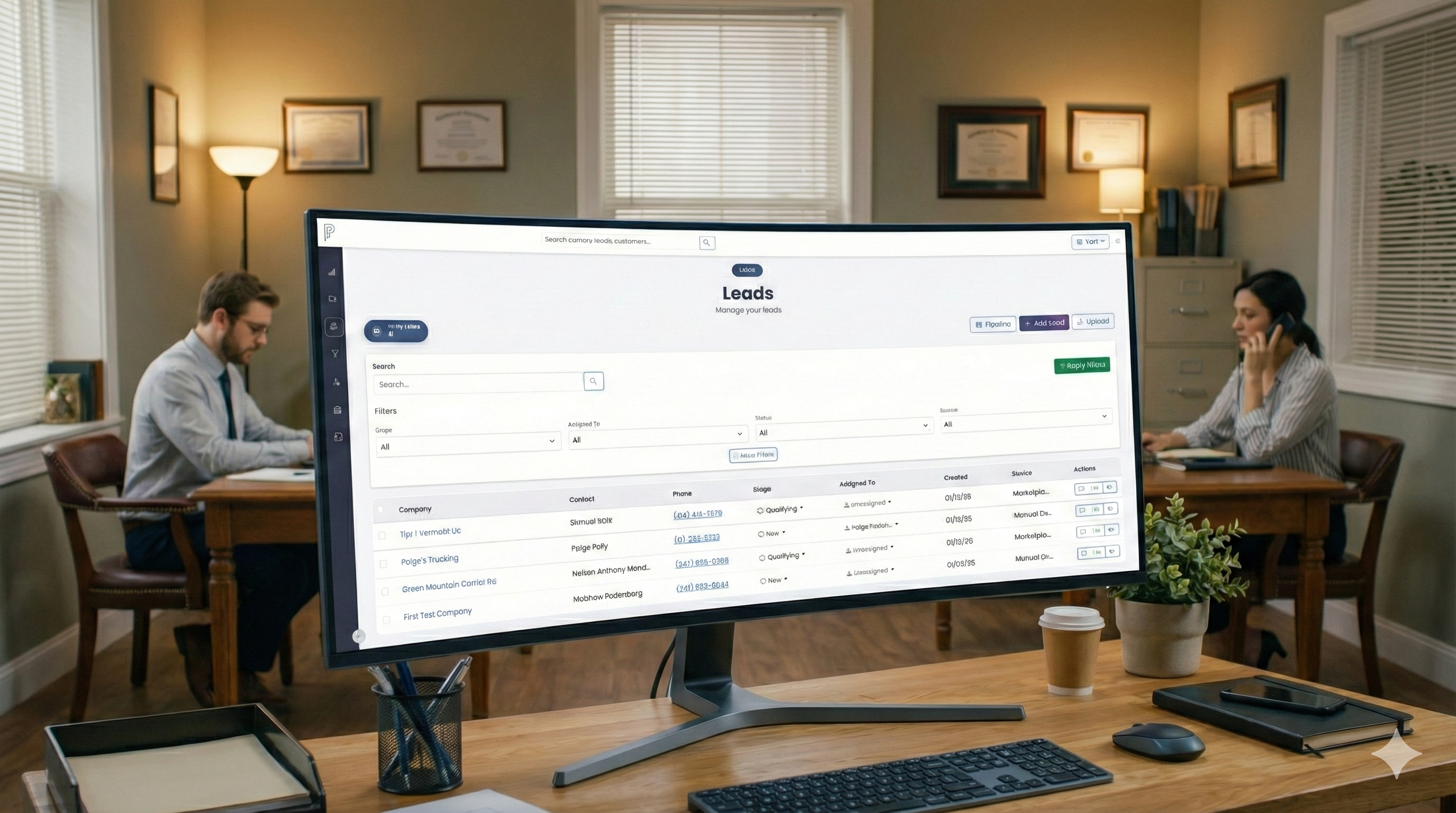
PollyAI runs this end to end: the FMCSA census filtered by power units, state, cargo, and authority age, contact data attached, email campaigns from your own inbox, and a pipeline that tracks every touch to bound policy. Plans start at $39 per month, with state bundles at $40 per state, so the math works even if the first list only produces one account.
Owner-Operator Prospecting FAQs
How do I find owner operators to insure?
Start with the public FMCSA census rather than bought lists. Every active owner operator is registered with a USDOT number, contact details, fleet size, and cargo types. Filter for 1 to 3 power units in your states, then prioritize new authorities and carriers near renewal.
Are bought owner operator lead lists worth it?
Usually not. Shared lists put you in a speed race against every other agent who bought the same names, and the data ages from the day it is exported. The census holds the same carriers, updated continuously, and filtering it yourself keeps the list exclusive.
How do I tell an owner operator from a fleet in FMCSA data?
Power units are the clearest signal. Owner operators typically report 1 to 3 power units on the MCS-150, often with a single driver. Combine fleet size, driver count, and authority type to separate true owner operators from small fleets.
When is the best time to reach an owner operator?
Two windows: right after a new USDOT registration, when insurance is required to activate authority and no incumbent agent exists, and the 60 to 90 days before an existing policy renews, when the operator is most open to a better quote.