If you spend any time in the agent forums right now, you have seen the conversation. Carrier411, MOTUS, identity verification, and a lot of questions about what the FMCSA's new registration system actually changes. It is the biggest shift in how carrier registration data flows in years, and most agents are still figuring out what it means for their book.
Here is the short version, and where forward-looking agencies are already finding an edge.
What the FMCSA MOTUS system actually is
MOTUS is the FMCSA's new USDOT Registration System, rolling out through 2026 to replace the older registration tools. The agency's own framing is that it exists to strengthen oversight, reduce fraud, and modernize how carriers register and stay current. For carriers, it becomes the single home base to apply for a USDOT number and operating authority, submit biennial updates, manage insurance filings, and keep company information current.
Two pieces matter most for the insurance side:
Identity verification at the front door
MOTUS uses Login.gov and identity verification when a company first sets up its account. Roughly 800,000 existing registrants have to pass through it. The point is fraud reduction, and the side effect is a cleaner pool of newly registered carriers, fewer fake or duplicate entries muddying your prospecting.
One modern source of record
Registration, authority, insurance filings, and safety data move into one integrated platform. The public can still search registration records and download carrier data through Data.Transportation.Gov, so the underlying information stays public. What changes is the shape, speed, and structure of how it comes out.
Why MOTUS matters for trucking insurance agents
A newly registered carrier is one of the best-timed prospects in your market. A brand new authority cannot legally operate without insurance, so the moment a carrier appears in the FMCSA system, they are actively in the market for a policy. Whoever reaches them first, with the right product, usually wins the account.
MOTUS does not change that fundamental truth. It changes the plumbing underneath it. As registration moves to a modern, identity-verified platform, the agencies that have already built their prospecting around fast, clean FMCSA data are positioned to capture more of that new-authority market, while agencies still working from stale, purchased lead lists spend 2026 catching up. For more on why that data access is the differentiator, see our piece on the competitive edge FMCSA data gives trucking agencies.
Public data is not the same as a usable lead
This is the part that trips people up. Yes, FMCSA carrier data is public. Anyone can download it. But public is not the same as usable, and that gap is exactly where the work is.
Raw FMCSA data is a firehose. To turn it into something you can act on before a competitor does, you need it the day a carrier registers, deduplicated, filtered to your states and the lines you write, matched to real contact information, and dropped into an outreach workflow that goes out under your own name. Downloading a giant public file once a month does not get you there. Speed and structure do.
What "ahead of the curve" actually requires
- Timeliness: new authorities surfaced the day they register, not weeks later.
- Clean targeting: filtered to your states, power-unit range, and the lines you actually write.
- Ready to act: contact details and outreach that send from your own domain, not a generic blast.
Why moving early on the MOTUS shift is the advantage
Big industry changes reward the agencies that adapt first. When the data landscape shifts, there is a window where the agencies that are ready pull ahead of the ones still adjusting. The MOTUS rollout is that kind of window.
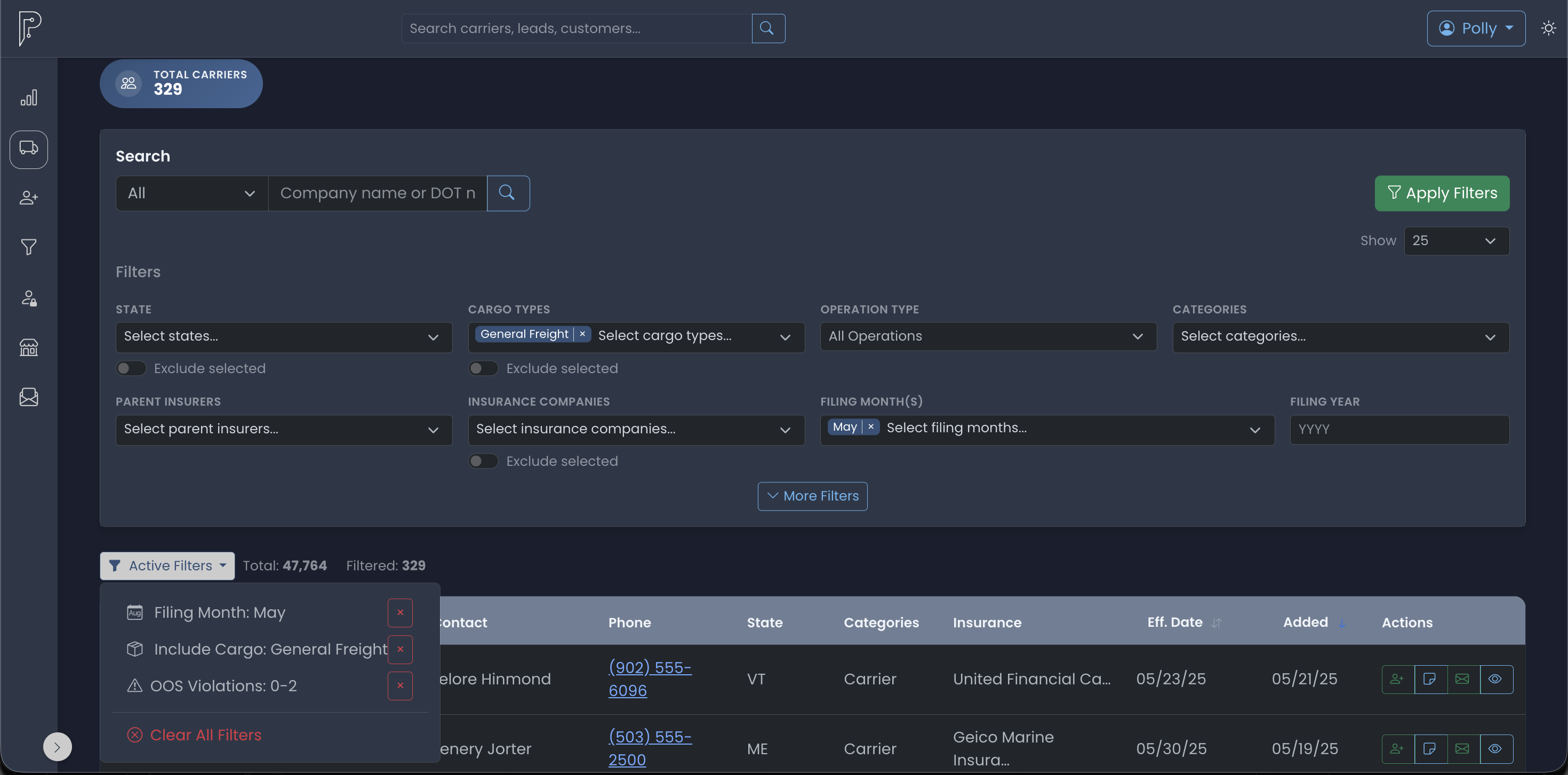
PollyAI was built for exactly this moment. The tagline is the whole thesis: turn FMCSA data into your next customer. PollyAI surfaces newly registered carriers fast and clean, lets you filter to your territory and book, and runs outreach from your own domain, so you are reaching new authorities while the opportunity is fresh. As MOTUS modernizes the pipeline that feeds all of this, agencies already working from modern tooling stay a step ahead rather than scrambling to react. You can see how that works on our new authority leads page, or browse the full platform features.
The MOTUS transition is real, it is happening in 2026, and every agent in your market is going to feel it. The ones who treat it as a prompt to modernize how they find new carriers are the ones who will come out ahead. You can read the FMCSA's own overview of the program on the FMCSA Move into MOTUS page.
Shopping for the tool to act on the MOTUS shift? Our Carrier411 alternative comparison covers where each platform fits for new-authority prospecting.
Ready to act on the shift? Our MOTUS-ready lead workflow turns the new-authority surge into your next quote.