Ask 10 producers how they handle commercial insurance prospecting and 8 will describe some mix of referrals, purchased leads, and hoping the phone rings. The other 2 run a system: a defined niche, a data source they own, outreach timed to buying windows, and numbers they check every Friday. Those 2 write more new business every quarter, and it is not because they work harder. It is because they stopped treating prospecting as a personality trait and started treating it as a process.
This guide lays out that process in 5 steps, using commercial trucking as the working example because it is the niche where the data advantage is largest. The same logic applies to any commercial line where public records reveal who the buyers are and when they buy.
What Is Commercial Insurance Prospecting?
Commercial insurance prospecting is the work of identifying, researching, and contacting businesses that need commercial coverage before they start shopping. Done well, it has three parts: a targeted list of risks you can actually write, a buying trigger that tells you when each prospect is likely to move, and an outreach cadence that reaches them inside that window.
The difference between prospecting and lead buying is ownership. A purchased lead is a business that raised its hand somewhere else, usually on a form that got resold to several agents at once. A prospect you sourced yourself is exclusive: nobody else is calling them on the same trigger at the same time, unless they built the same list you did.
Why Most Prospecting Advice Fails Commercial Agents
The standard advice list (ask for referrals, join associations, post on LinkedIn, buy internet leads) is not wrong, it is just incomplete. Each channel has a ceiling:
- Referrals are the best-converting source and the least controllable one. You cannot schedule a referral, and a book that grows only by referral grows at someone else's pace.
- Shared internet leads put you in a bidding war. The same form fill can be sold to as many as 8 agents, and the winner is usually whoever calls first and cuts deepest.
- Inbound content compounds beautifully but takes quarters, not weeks, and most independent agencies cannot outspend national players on it.
- Cold outreach without data is where prospecting gets its bad name: a generic list, a generic script, and a 1% connect rate that convinces the producer prospecting "doesn't work."
The fix is not a new channel. It is picking a niche where you can see the whole market in data, then working that data on a schedule.
Step 1: Pick a Niche Where the Data Lives
Prospecting systems run on data, so the niche decision is really a data decision. Commercial trucking is the standout: every interstate motor carrier in the country registers with the FMCSA, and that census is public. Fleet size, cargo types, operating states, safety record, insurance filing status, and the date the current insurance was filed are all sitting in government records, updated continuously.
No other commercial line hands agents a complete, current market map like that. Restaurants, contractors, and retail risks live in fragmented state and commercial databases. Motor carriers live in one. That is why a generalist commercial producer who niches into trucking can out-prospect a 20-year generalist within months: the trucking specialist can see every prospect in the state, and the generalist is still guessing.
Step 2: Build the Prospect List from Public Data
Start with the raw census. You can look up any single carrier free through the FMCSA's SAFER Company Snapshot, which is the right tool for checking one prospect before a call. Building a working list means applying filters across the whole census:
- Geography: the states where you hold licenses and carrier appointments.
- Fleet size: power unit counts that match your markets' appetite. A 1-truck owner operator and a 40-truck fleet are different sales with different carriers behind them.
- Cargo and equipment: reefer, flatbed, hazmat, and specialty cargo each map to specific programs you may or may not have.
- Authority status and age: new authorities have different needs (and fewer incumbent relationships) than 10-year operations.
Filtering the census by hand is possible and slow. The practical version is a data platform that keeps the census current and makes the filters point-and-click; our DOT leads guide walks through exactly how that workflow compares to buying lists from brokers.
Step 3: Time the Outreach to Buying Windows
A perfect list contacted at a random time performs like a mediocre list. Commercial insurance is bought on a calendar, and in trucking that calendar is visible in the data:
60 to 90 days before the current policy renews
Insurance filing dates in the FMCSA census tell you approximately when each carrier's policy term ends. A quote conversation 60 to 90 days out lands while the buyer still has time to shop, not after the incumbent has already re-signed them.
The first weeks after an operating authority is granted
A new motor carrier must secure insurance to activate its authority, has no incumbent agent, and is actively shopping right now. Speed decides these accounts. Our guide to prospecting new trucking authorities covers this play step by step.
Fleet or operating changes
A carrier that added power units, new cargo types, or new operating states has coverage needs its current policy may not match. Census changes surface these accounts before they think to call anyone.
Step 4: Run a Daily Cadence, Not a Quarterly Blitz
Prospecting fails most often at the calendar, not the list. The producers who win in trucking commit to a small daily block: pull the new prospects that entered a buying window overnight, launch or continue outreach sequences, and move responders into the pipeline. Done with the right tooling, that is a 15-minute block, and we wrote up the exact routine in The 15-Minute Morning.
Two cadence rules carry most of the weight:
- Multi-touch, multi-channel. One email is not outreach. A sequence of 3 to 5 touches across email and phone, spread over 2 to 3 weeks inside the buying window, is what gets responses from busy owners.
- Send from your own domain. Email that comes from your agency's real inbox, with your name and your signature, gets delivered and gets answered. Bulk-sender blasts from rented domains train prospects (and spam filters) to ignore you.
Step 5: Measure Pipeline, Not Activity
Track 4 numbers weekly: prospects entering a buying window, outreach sequences started, quote conversations opened, and policies bound. Those 4 form a funnel, and the funnel tells you where to fix. Low sequences-started means the daily block is not happening. Low quote rate means the list or the message is off. Low bind rate means a market or pricing problem, not a prospecting problem. Producers who only count dials never learn which of those is true.
The Commercial Prospecting Stack, In One Place
- Market map: the full FMCSA census, filtered to risks you can write
- Buying triggers: renewal windows, new authorities, fleet changes
- Outreach: sequences that send from your own Outlook or Gmail inbox
- Pipeline: every touch tracked from first email to bound policy
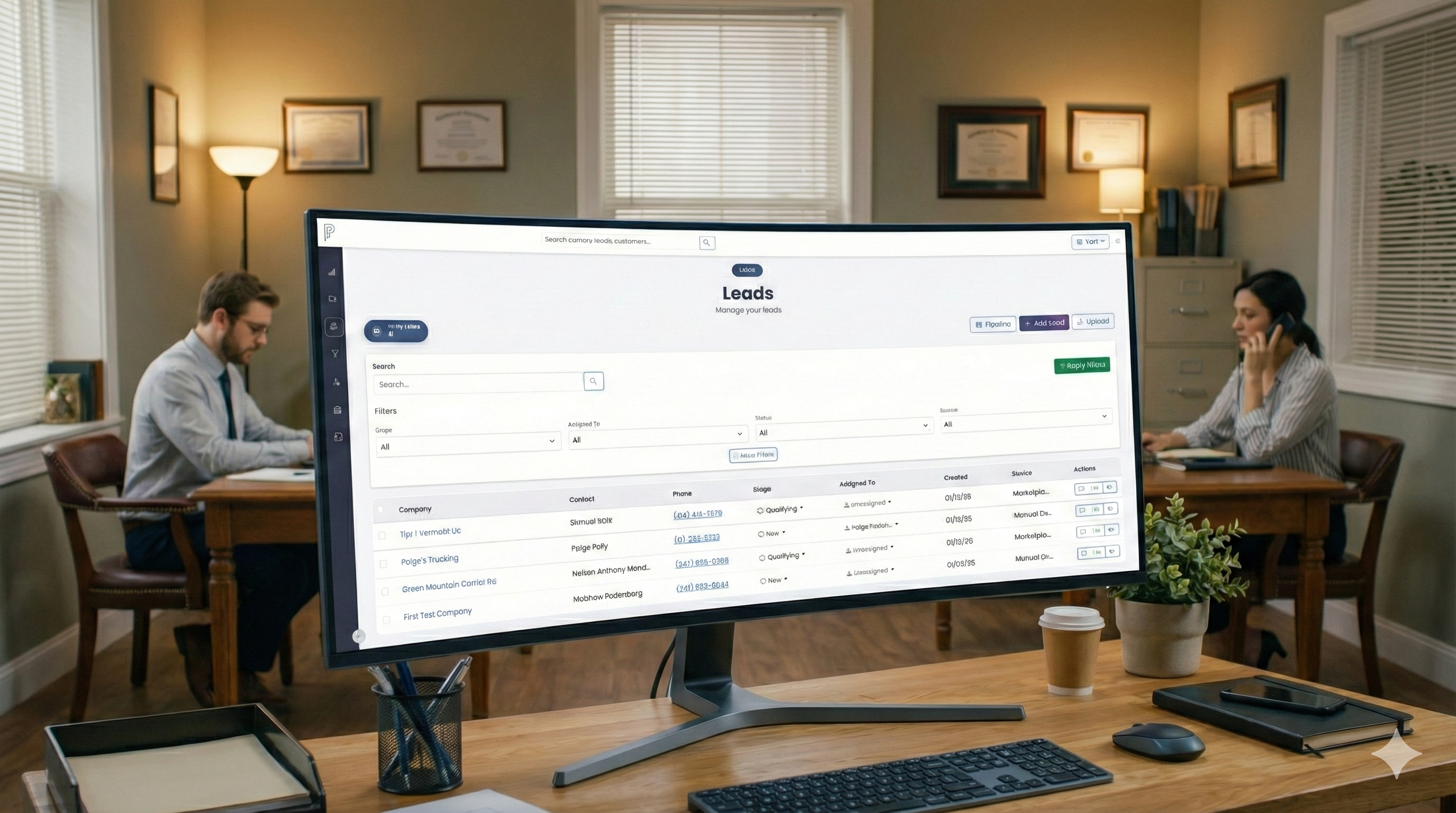
PollyAI is that stack for trucking and commercial auto agents: the census, the filters, the renewal dates, the outreach, and the pipeline in one tool. Plans start at $39 per month, and a single bound account typically covers the year.
Commercial Insurance Prospecting FAQs
What is commercial insurance prospecting?
Identifying, researching, and contacting businesses that need commercial coverage before they start shopping. The working parts are a targeted list, a buying trigger, and an outreach cadence timed to that trigger.
How do commercial insurance agents find prospects?
Referrals, purchased leads, inbound marketing, or public-data prospecting. In trucking and commercial auto, public data wins because the FMCSA census lists every active carrier with fleet size, cargo, location, and insurance filing dates.
When is the best time to contact a commercial insurance prospect?
Inside a buying window: 60 to 90 days before renewal, or in the first weeks after a new operating authority is granted. Timed outreach reaches a buyer with a live reason to quote.
Does cold outreach still work in commercial insurance?
Yes, when the list is filtered to writable risks, the message references specifics like fleet size or renewal timing, and the email sends from your own domain instead of a bulk sender.